Water-Assisted Sweeping vs Dry Sweeping in Dust-Prone WA Conditions
Western Australia is known for its dry climate, strong winds, and dust-prone industrial environments. For warehouses, logistics yards, construction sites, and car parks, dust control is not just about appearance, it is about safety, compliance, and operational efficiency.
Choosing the right sweeping method plays a huge role in maintaining clean and safe surfaces. Two common approaches are water-assisted sweeping and dry sweeping.
If your facility already relies on professional services such as warehouse sweeping in Perth, understanding how these methods work can help you make better decisions about site maintenance.
Why Dust Control Matters in WA Industrial Environments
Dust accumulation can cause more problems than many site managers realise. In Western Australia’s dry conditions, dust particles easily become airborne.
- Reduced air quality for staff
- Slippery surfaces from fine dust build-up
- Increased wear on equipment
- Contamination of inventory
- Safety compliance risks
What is Dry Sweeping?
Dry sweeping is a traditional cleaning method that uses rotating brushes and airflow to collect debris without water.
How Dry Sweeping Works
- Rotating brushes loosen debris
- Airflow pulls dust into the machine
- Filters capture fine particles
- Debris is stored in a hopper
Limitations in Dust-Prone Conditions
In WA’s dry climate, dry sweeping can sometimes redistribute dust instead of removing it.
- Dust becoming airborne
- Fine particles escaping filtration
- Reduced visibility
- Dust settling again after cleaning
What is Water-Assisted Sweeping?
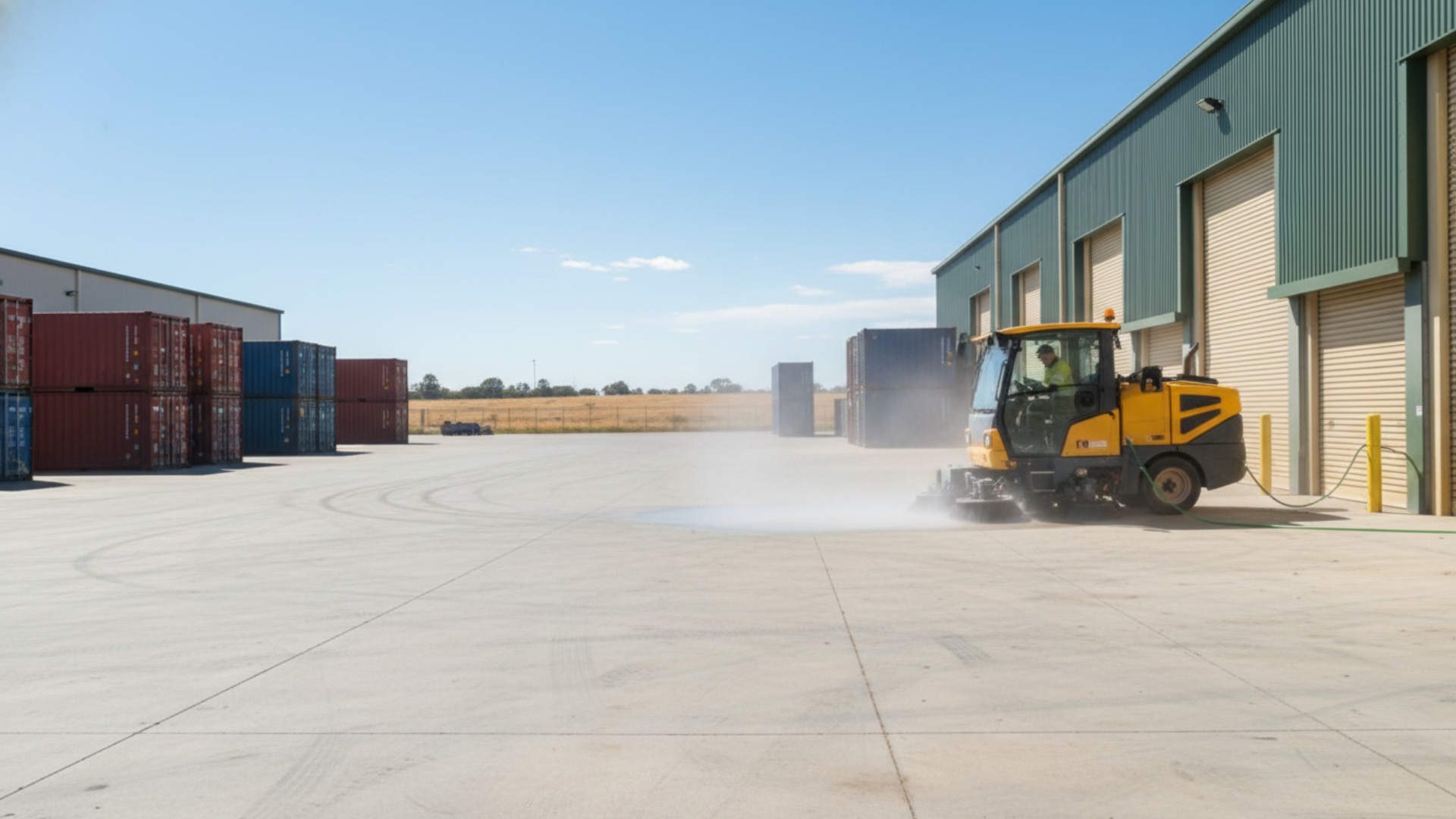
Water-assisted sweeping uses controlled misting systems to dampen dust particles during the sweeping process.
How the System Works
- Fine mist water sprays near brushes
- High-efficiency vacuum systems
- Advanced filtration units
- Debris collection hoppers
Key Advantages of Water-Assisted Sweeping
Better Dust Suppression
The light mist prevents fine dust from becoming airborne.
Improved Surface Cleaning
Dust particles bind together, making them easier to collect.
Safer Working Conditions
Cleaner air helps improve workplace safety. Many facilities implement cleaning programs alongside a warehouse safety checklist.
Longer Lasting Clean
Dust is captured rather than redistributed.
When Dry Sweeping Still Makes Sense
- Large outdoor areas
- Locations with water restrictions
- Quick interim cleaning
Choosing the Right Sweeping Method
The best sweeping method depends on factors such as surface type, traffic levels, and environmental conditions.
Facilities often combine multiple cleaning solutions through professional industrial cleaning services in Perth.
Why Professional Sweeping Equipment Matters
Poor equipment and inexperienced operators can lead to ineffective cleaning and poor dust control.
This is why businesses should avoid hiring unqualified industrial cleaners who lack the expertise required for industrial sites.
Final Thoughts
WA’s dry climate makes effective dust control essential. Water-assisted sweeping provides a more effective solution for controlling fine dust and maintaining safer workplaces.